steadyresponse.com

Get seen as ready for the role one level up. By the people who actually decide.

Ninety minutes or ninety days, live with Laura. You will get the exact plan to put your results in front of the people who decide, the sentences your manager needs to have about you, and the steady body and voice to say what you want in their presence.

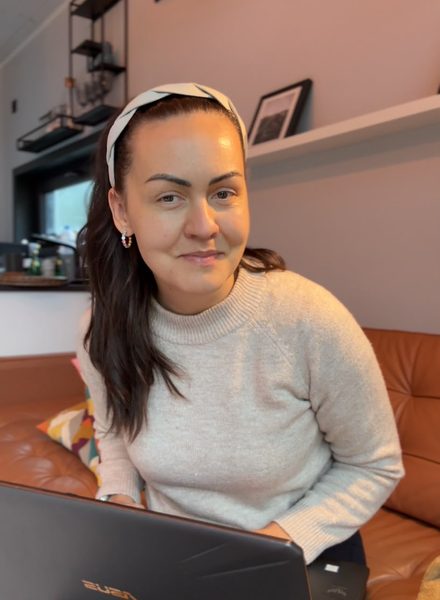
Laura Esmite
What I learned

What I learned, and why it works for your promotion

I was inside their thinking, every day.

Fifteen years of one-to-ones where they explained their decisions to me.

  • why they chose one person over another
  • what a ‘yes’ needed to look like
  • which arguments they respected, and which they dismissed in one sentence

The real education was the ten minutes after the meeting.

They trusted me with what they never said out loud.

Their shadow. Their left and right hand. On the hard days, both legs.

  • who they’d back
  • who worried them
  • who they’d stopped noticing, and why

They explained it to me, and taught me how to read it myself.

I know what they look for when a name comes up.

  • specific sentences about what she decided, and what happened
  • someone above her manager who has heard her name
  • a reason moving her is easier than keeping her
  • she has said, out loud, that she wants it

Miss one, and the name waits another cycle. Nobody tells her why.

I know what they read before you say a word.

  • eye contact when it gets hard
  • shoulders
  • a level voice, or one that climbs
  • the pause, or the rush to fill it

‘Ready’ or ‘not yet’ in about thirty seconds. And it can be trained.

Laura Esmite
A note from Laura

Hey, it's Laura.

I built this because of what happened to the women I worked with. Excellent at the job. Doing the work of the role above them for a year, two years, with no change in pay, no recognition, and weeks that ran past seven every night. When their names came up, the people deciding had vague sentences about them: "she's very solid," "the team loves her." The person who got the role came with specific ones: "she pushed the launch back two weeks and she was right."

The difference was what the manager had in his head when his turn came. And whether she could say what she wanted, to his face, with her voice staying where she put it.

Both of those are learnable, and women who learn them get the pay, the respect, and the week back. So that is what we do together, with your manager, your company, and your next review. I help you see what you can't see from where you sit, we build the plan, and I'm in your week while you do it.

Laura
Who this is for

For the woman who's excellent at her job and whose name never comes up where it matters.

You might think you're visible. You present, you deliver, your manager praises you. And still the people above him could not say what you did this year, because it reached them as "the team handled it," and nobody has heard you say what you want.

If you're

  • doing the work of the role above you, on the same pay, for a year or more
  • saying thank you to "exceeds expectations" for the third year running
  • agreeing in the meeting and arguing in the car on the way home
  • telling yourself you'll bring it up after the Q4 numbers, like you did after Q1
  • the person everyone comes to, and the one who was passed over for someone you helped onboard
  • working past seven most nights and wondering why that doesn't count

this is for you.

Not for you if you want someone to negotiate the number for you, or to find you a new job. I work on how you're seen and how you hold, inside the company you're in. Salary negotiation and job search are real skills, and other people do them well.

Where I stand

Promotions are not decided in the review.

What everybody tells you.

Work hard. Be patient. Keep delivering and it will come.

What actually happens.

The decision is made months earlier, in a smaller meeting, where your manager has to say in a few sentences what you did this year and why you should move up. If he has specific sentences, you move. If he has vague ones, you get "keep doing what you're doing." And he only has specific sentences if you gave them to him, in your one-to-ones, with a decision and a result in each one.

The other half is physical, and it is not only the hard conversations.

It is the normal Tuesday meeting where you have an opinion and let the moment pass. The update where you talk faster than you think. The question from someone senior where your voice goes up at the end like you're asking permission. The eyes that drop to your notes exactly at the hard word. The shoulders that come forward. The smile that arrives before the pushback has even started. The "that's fair" that leaves your mouth before you have decided whether it is.

They read your body and your presence before they hear a word you say. Eye contact, posture, pace, the pause after your point: that is where "ready" or "not yet" gets decided, in the first thirty seconds. In the one-to-ones where the people deciding explained their choices to me, that is what they described, every time, before they ever got to the results.

So we work on both. The sentences, and the steady body and voice that carry them into every meeting, not just the big one.

Two ways to work with me

The short one

The promotion strategy session

You leave with your GAME PLAN.

  • Who actually decides your promotion and when.
  • What they need to see for the next level, in their words.
  • The sentences your manager needs to hear from you between now and then, and how often.
  • Which of your results need to reach the people above him, and how.
  • What to practise in which meetings: eye contact, posture, tone, pace, the pause after your point.
  • And the one conversation to have in the next four weeks, with what to say in it.

How it goes. You book the session and ten questions arrive by email: your company, your manager, who you think decides, what has been said about you, what you've already tried. About twenty minutes. I read your answers the night before. Then a ninety-minute call on Zoom, one to one, live. By the end of the call you already know where your gaps are and what to do about them. Within 24 hours you have it in writing.

And then you know exactly what to do. You stop working in general and hoping someone notices. You focus your week on the right things, said to the right people, in the right way. Two weeks later I check in: what did you do, what happened.

The guarantee. Answer the ten questions, show up for the ninety minutes, and if you don't leave with a GAME PLAN you'd actually use, tell me on the call and I refund you.

$99 until 30 November. Then $149.

If you continue to the long one, it comes off.

The long one

The 90-day program

You get the GAME PLAN, and me in your week while you do it.

What happens in the 90 days.

  • It starts with the session above.
  • Then twelve weekly one-to-one calls with me, and between them your real meetings are the training.
  • Together we build the sentences your manager can repeat and get them to him on a rhythm.
  • We get your results to the people above him, in their words.
  • You say what you want, out loud, to the person who needs to hear it, and we prepare it the day before.
  • You train eye contact and posture under pushback in a low-stakes meeting first, then in bigger ones.
  • You train the voice that stays level when someone senior frowns, the pause after your point, presenting your own work and taking the questions, disagreeing with your manager calmly once and surviving it, and the one-to-one about your growth that has never been on the agenda.
  • If the role you're doing doesn't exist on paper yet, we build that conversation and the date.
  • When a real conversation happens, you send me a voice note within 24 hours and I correct it while it's fresh.
  • When a big one lands on your calendar, we prepare it the day before.
  • You record yourself in week one and in week twelve, so you see the change yourself.
  • Six months after we finish, one more call.

The promise. By week twelve you take the trained response into a real high-stakes conversation and your body holds. The pay, the recognition and the week you want land on your company's cycle, inside the 90 days or just after, and I tell you in week one which it looks like. Do the reps, send the voice notes, and if by week twelve your body doesn't hold in a real conversation, we add four weeks at no cost.

$990 for places starting before the end of 2026. From January the price goes up.

Two payments possible. Your place is held for the full 90 days, so there are no refunds.

→ 30 minutes, free. We talk about your situation and whether this fits. No plan is given on the fit call; that is what the session is for.

What the GAME PLAN looks like

A precise map for your promotion, built after we talk, from your situation and nothing generic. So you stop winging it and hoping for the best.

The questions it answers

  • Who actually decides your promotion, and when the decision gets made in your company
  • What they need to see for the next level, in their words, not yours
  • What your manager says about you today when his boss asks, and what he should be saying
  • Where your results stop travelling, and who above your manager has never heard your name
  • What your body and voice do in the meetings that matter, and which of those meetings to train in first
  • Which conversation to have in the next four weeks, and what to say in it

What it gives you

  • The exact steps to be seen as the next level by the people who decide, in the order to do them
  • The sentences your manager needs to have about you, and a rhythm for giving them to him
  • Pay that matches the work you already do, built into the plan as the thing you're asking for, not hoping for
  • Recognition from the people above your manager, by name, before the next cycle
  • A week that ends at a normal hour, because the plan replaces "do more" with "do the right things where they can be seen"
  • A voice and a presence you can count on in every meeting, not just the big one
  • A date on the role that exists in practice, when it doesn't exist on paper yet

There are more questions than these, and they change with your company and your manager. When they're all answered, that's the GAME PLAN.

What happens next

The session: you book, you pick a time, the ten questions are in your inbox within five minutes.

The program: you book the fit call, we talk for thirty minutes, and if it fits you get the payment link and your first session date the same day.

Questions women ask before they book

Which one should I start with?

The session. Every program starts with it, and it comes off the price. After it, you'll know.

The role I'm doing doesn't exist on paper yet.

That is the most common situation I see, and it has its own conversation. We build it in the session.

My manager isn't the one who decides.

Then we find out who is. Most women are talking to the wrong person.

I did a course and nothing changed.

I believe you. A course trains your thinking. Nothing you've done has trained your eyes, your posture and your voice in a real meeting, with a real director pushing back. That is the only place it changes, and it is the only place we train.

Is this just for extroverts?

No. Most of the women I work with hate attention. We don't train you to want it. We train you to hold when it lands on you.

I don't have time.

One hour a week with me. Everything else happens inside meetings you already attend.

Can my company pay?

Often, yes. I invoice your company directly. Many learning budgets cover 1:1 coaching.

The next cycle is already forming. Be the name they have the sentences about.

Book the session, $99 Book the fit call for the program